Beef Cut Chart How to Cook
Beef cuts
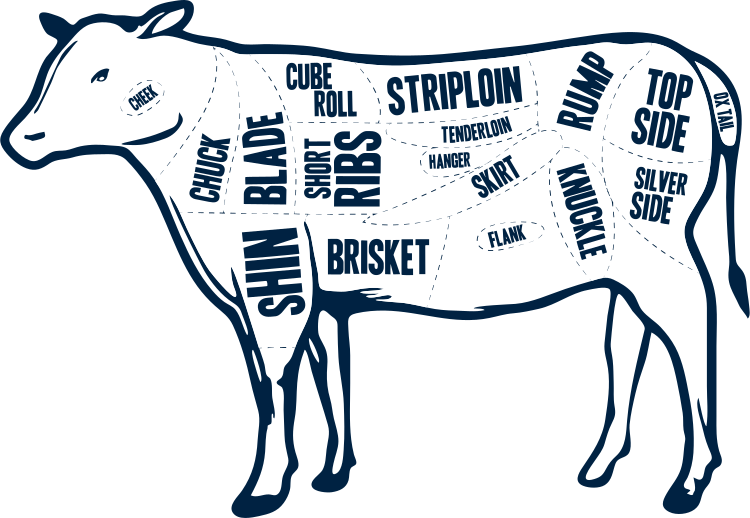
The central cuts of the beefiness carcass are the basic cuts separated from the carcass during butchering. Click on a cutting beneath to see information most the derived sub-cuts. The term "primal" is not the aforementioned equally "prime number" which characterizes the college quality cuts.
Brisket
There are 2 briskets per animal accounting for around vii.2% of the carcase. Derived from the underside chest area between the front end legs, brisket is a well exercised muscle with ample connective tissue.
VIEW ALL RECIPES
Point end brisket
Existence a well exercised muscle, the point end has a high degree of connective tissue and is best suited to deadening wet cooking methods such equally braising and casseroling. This beefiness cut is perfect for shredding as information technology literally pulls apart when cooked.
Navel end brisket
The Omphalus End is more square shaped than the point end brisket and slices up more neatly. Same as the point end brisket, this cut needs to exist cooked low and slow.
Bract
Derived from the shoulder region of the animate being, blade accounts for effectually 5.five% of the carcase. Flavoursome and versatile, it contains several muscles with layers of fat and connective tissue and performs well as a ho-hum braise or roast.
VIEW ALL RECIPES
Bolar blade roast
Beef bolar bract roast is from the shoulder blade of the beefiness. Information technology is a very flavourful cut that is versatile plenty to be cooked whole as a roast, sliced into steaks and cooked on the charcoal-broil or in a pan, thinly sliced for a stir-fry or diced for slow cooking in a braise or casserole.
Blade steak
Blade steak comes from the shoulder blade. Information technology is a versatile cut that tin exist barbecued and pan-fried, cut into strips and stir-fried or diced for boring-cooking in a braise.
Oyster blade roast
The oyster bract is connected to the shoulder blade of the beefiness. Information technology is a very flavourful cut that is versatile enough to be cooked whole as a roast, sliced into steaks and cooked on the barbecue or in a pan, thinly sliced for a stir-fry or diced for slow cooking in a braise or casserole.
Flat iron steak
Although oyster blade steak tin can sometimes be referred to as flat atomic number 26 steak, true flat atomic number 26 steak has all of the connective tissue and silver skin removed from the oyster blade and is cut into easy to apply portions that are lean and extremely tender, juicy and total of flavour.
Oyster bract steak
The oyster blade sits on the shoulder blade and when separated from the shoulder can be cutting into steaks for pan-frying or barbecuing. It has a thin line of gristle that runs through the centre of the steak which should be scored to foreclose curling when cooking. Information technology is also a perfect cut for stir-frying with its full season and tenderness.
Cheek
Cheek is the hard-working, lean facial cheek muscle, housing an abundance of connective tissue, known as collagen.
VIEW ALL RECIPES
Cheek
This cut responds well to moist, ho-hum extended cooking methods. Cheek is perfect diced in curries, braises and stews, only also holds its shape well when cooked whole.
Chuck
Made up of multiple muscles, chuck is a well used area so contains a great deal of connective tissue. Popular for its balance of meat and fat, the chuck offers ribs, roasts and steaks and suits a range of cooking methods. Perfect for curries and stews with great full season and a fantastic gelatinous texture.
VIEW ALL RECIPES
Chuck scroll
Because of its high amounts of connective tissue, the chuck curl is popular as a slow cook or braising cut. And information technology's as well good for thinly sliced Korean style grill cooking.
Chuck ribs
Chuck ribs are a crowd favorite, known for their richness and meatiness. Best slow-cooked for a flavourful, moist and tender issue.
Chuck Steak
Irksome-melt to bring out its total, savory flavor.
Chuck eye log
Chuck eye log is a boneless tender cut. It is therefore extremely tender and juicy with infrequent flavour.
Cube Roll
The cube roll, or rib-eye roll, is prepared from the forequarter; running along the back of the animal from the quaternary to the 13th rib between the chuck and the striploin.
VIEW ALL RECIPES
Standing rib roast
The continuing rib roast is the scotch fillet with the rib bones fastened. Because it'south taken from muscles non heavily exerted, the meat is very tender and delicious. The retention of the rib bones impart extra flavour during cooking.
Rib cutlet
Take a beef standing rib roast and slice information technology into steaks. This gives you lot a rib cutlet. If y'all remove the bone from the steak it becomes a scotch fillet. Like a scotch fillet, rib cutlets are tender, full of flavour and perform best when cooked in a pan, on a barbecue or sliced thinly for a beef stir-fry.
Scotch fillet steak
Scotch fillet steak is prepared from a boneless beefiness rib set. The scotch fillet is found on the back of the animal and runs from the striploin (sirloin) to the chuck. Being a 'support' muscle non subjected to the heavy work of moving the brute around, scotch fillet steaks are tender, tasty and moist and perform best with fast hot cooking methods such equally pan-frying and barbecuing or stir-frying when thinly sliced.
Scotch fillet roast
The scotch fillet or cube roll sits between the chuck and the striploin (sirloin) muscles over the back of the animal and is a very tender, moist and flavourful cut of beef perfect for a special roasting occasion. Given its tender nature information technology can likewise be sliced into steaks to barbecue and pan-fry or strips to stir-fry.
Flank
Also known as bavette, this long flat steak is taken from a single muscle beneath the loin in the intestinal surface area.
VIEW ALL RECIPES
Flank steak
The flank steak is extremely versatile. Perfect for sparse slicing for a stir-fry, flank steak as well performs extremely well nether wearisome-cooking weather condition. After slow-cooking, this beef cut can exist shredded with a fork and added to burritos or salads.
Hanger
Besides known every bit thick skirt, in that location is only one hanger per animal - it 'hangs' from the last rib, attached to the diaphragm.
VIEW ALL RECIPES
Hanger
Hanger steaks tin exist difficult to find every bit there's just ane per brute. While non particularly tender, it has a robust season and is best cooked quickly over high heat.
Eye of knuckle
The knuckle sits higher up the knee joint at the forepart of the hind leg. Fabricated up of three muscles, information technology'southward prepared from the thick flank by removing the cap muscle and associated fat. Heart of knuckle is the lean, centre weight-bearing musculus with footling connective tissue. Used for roasting or preparing further into medallions, it produces a notably tender and delicious result when cooked with moist, slow methods.
Ox Tail
The ox tail cut starts at the base of the spine. The fat is trimmed and the final ii to three tail bones removed, before being cut into short joints.
VIEW ALL RECIPES
Ox tail
Slow cooking this distinctive cut brings out a robust, full-bodied flavor while creating meltingly tender meat.
Rump
The rump is a boneless v-muscled primal that sits between the sirloin and topside. Extremely versatile rump can be sliced whole into rump steaks or subprimaled to reveal a range of cuts with varying textures and tenderness.
VIEW ALL RECIPES
Rump Steak
A corking all-rounder steak, rump is perfect for a variety of cooking methods. Information technology tin can be eaten as a steak, diced for kebabs or sliced into strips for a stir-fry.
Rump roast
Lean and economical, this cut is best for feeding a crowd. When roasted in the oven, piece thin confronting the grain to maximise tenderness.
Rostbif
Rostbif is a cut of beef that is in some countries considered to be the best cutting of beef due to its marked flavour. Rostbif can exist roasted whole in a hot oven, barbecued whole or cutting (beyond the grain) into steaks or sliced into thin strips for a tender and delicious beef stir-fry.
Rump cap
Rump cap is a cut of beef that is in some countries considered to exist the best cutting of beef due to its marked season. It is famous and well liked in S American countries, specially Brazil where it is known as "Picanha". Rump cap can be roasted whole in a hot oven, barbecued whole or cut (across the grain) into steaks or sliced into thin strips for a tender and delicious beefiness stir-fry.
Rump centre steak
The lean middle muscle of the rump, this steak is best suited to quick cooking on a hot barbecue or pan. For best results, do not cutting more than 1.5cm thick and practise not cook more than medium-rare. Given its tender nature it can also be thinly sliced into strips to stir-fry.
Rump medallion
One of the 5 muscles that make up the whole rump, eye of rump is a short, lean, log-shaped muscle ideally suited to cutting into medallions. These appealing medallions are perfect for fast cooking on a hot surface like a barbecue or pan, merely are versatile enough to be sliced for a stir-fry or diced for a braise or casserole. It tin can as well be kept whole and tied with string to grade a compatible shape for roasting. Perfect for a Beef Wellington or wrapped in bacon for mignons.
Shin
Because it comes from a well-exercised muscle, shin has fiddling fat and arable connective tissue. Bone-in is oftentimes cutting across the os into osso-buco whilst boneless shin is prepared from either the shin expanse or the heel muscle in the silverside. Shin suits moist depression, slow cooking to allow the connective tissue to tenderise while enriching with flavour. The resulting meat is tender and rich in flavour.
VIEW ALL RECIPES
Shin os-in/ Osso Buco
Shin os-in is prepared from the bottom portion of either the forepart or rear leg. As this cut comes from a musculus used constantly for motility, it contains a loftier amount of connective tissue. This tissue breaks down when prepared using slow moist cooking methods such as casseroling and braising imparting a rich, full bodied season and a delicious gelatinous texture.
Boneless Shin
Much similar other well exercised cuts of Beef, slow-moist cooking methods, such as braising and stewing are best used to break the connective tissues and soften up the meat.
Short Ribs
Short ribs are taken from the forequarter after the brisket is removed. They're made up of the rib os and layers of rib meat and fatty.
VIEW ALL RECIPES
Brusque ribs
Full of season and fall-off-the-bone tender, but also bachelor boneless. Grill or deadening-roast for a delicious beefiness dish.
Silver Side
Silverside comes from the outside of the rear leg and sits between the knuckle and the topside. Fabricated upwards of five distinct muscles, information technology'south named after the silverish wall of connective tissue that sits on the side of the cutting, which is removed before cooking. As a well-exercised group of muscles, knuckle cuts demand gentle, moist cooking. The resulting texture melts off the fork.
VIEW ALL RECIPES
Corned silverside
Existence a muscle heavily used for walking, the silverside requires the gentle moist cooking of corning to produce a tender and succulent beef dish.
Skirt
Located on the inside of the abdomen wall just below the ribs, brim steak tin can be either of two long, apartment, well-marbled muscles: the diaphragm and the abdominal muscle.
VIEW ALL RECIPES
Skirt steak
Skirt steaks are versatile and total of flavor. When cooked on high heat, the characteristic marbling imparts an outstanding flavor. Piece it thick against the grain before serving to ensure maximum tenderness.
Striploin
The striploin is located along the spine in the hindquarter and runs from the ribs to the rump, sitting above the tenderloin.
VIEW ALL RECIPES
Sirloin steak
The discussion sirloin was derived from the Old French give-and-take surlonge, meaning sur la longe or above the loin. Sirloin roast is the piece of beef betwixt the rump and the ribs. Coming from an area of the animal where the muscles do less work, the sirloin is tender and flavourful and well suited to roasting. If you don't experience similar a roast though, this cut can also exist sliced into steaks or stir-fry strips.
T-os
The t-shaped bone in the T-bone steak is from the back of the animal. The fillet and sirloin muscles sit on opposite sides of this t-shaped bone to form the T-os steak. With piffling or non fat or connective tissue the T-os is a quintessential Aussie steak perfect for pan-frying or barbecuing.
Tenderloin
A long and lean muscle, this is the almost tender cutting of beefiness available. The tenderloin is the source of tenderloin steak or filet mignon, and is a component of the T-Bone and scotch fillet steaks.
VIEW ALL RECIPES
Fillet steak
Typically the tenderest cuts of beef with the least amount of connective tissue are those cuts that sit along the spine of the animal as they do the least amount of piece of work. The fillet or tenderloin (as the proper name suggests) is one such cut. With trivial or no fat or connective tissue the fillet is best suited to portioning into steaks for pan-frying and barbecuing or strips for stir-frying.
Barrel fillet
The butt fillet comes from the larger end of the tenderloin and is a tender cut of beefiness due to the little corporeality of piece of work it undertakes. Butt fillet tin be roasted whole or prepared farther into steaks. Because it'south so lean and tender, it is best suited to fast, hot cooking methods to ensure it retains moisture, flavour and tenderness.
Summit Side
Topside comes from the within of the hind leg, between the thick flank and the silverside. Topside is extremely lean and performs all-time when diced for slow-cooking in a hearty casserole or braise.
VIEW ALL RECIPES
Topside roast
As a well-used muscle, the topside roast is extremely lean with a lot of connective tissue. Topside roast also performs well diced and cooked slow in a casserole or braise.
Topside steak
Topside steak is sliced from the whole topside which comes from the inside of the hind leg, between the thick flank and the silverside. Although sold every bit steak, performs best when diced for tiresome-cooking in a hearty goulash or braise.
Source: https://www.australianbeef.com.au/know-your-meat/beef-cuts/

Post a Comment for "Beef Cut Chart How to Cook"